
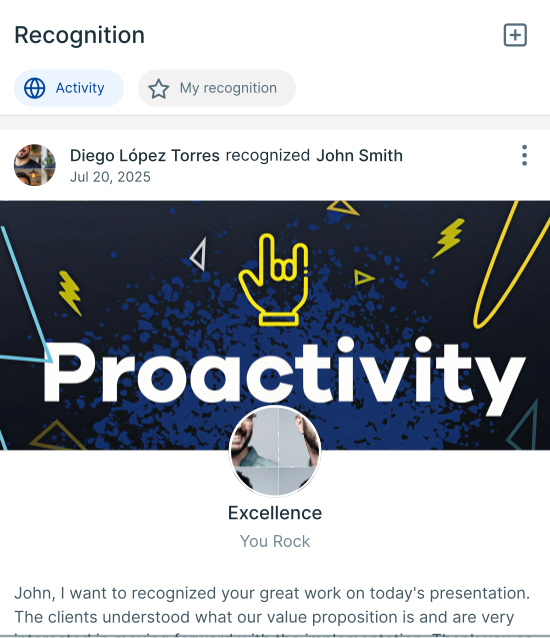
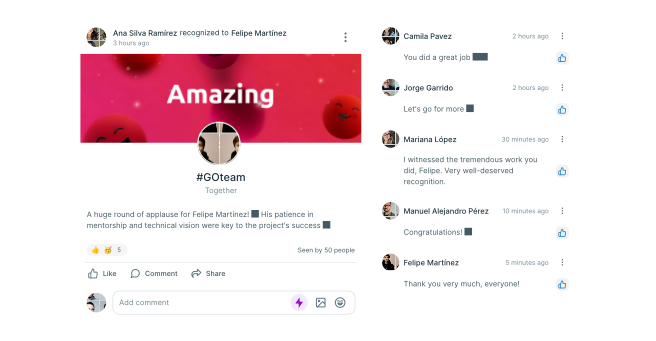
Reinforce the company culture
Peer-to-peer recognition becomes visible across the entire organization. Teams can recognize achievements, celebrate contributions, and reinforce the culture directly in the social feed.
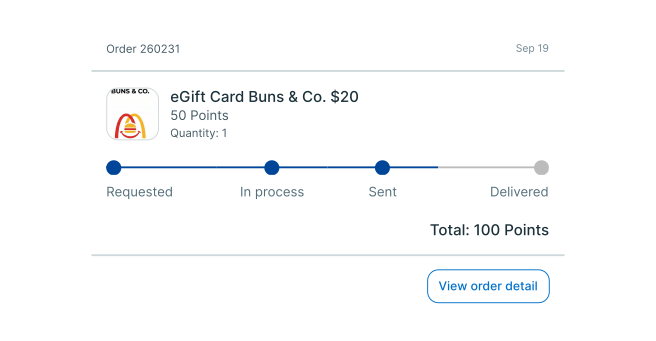
Awards and Incentives Program
Turn employee recognition into rewards that motivate, with points redeemable for gift cards, products, and experiences. Hassle-free employee incentives, easy-to-use app.
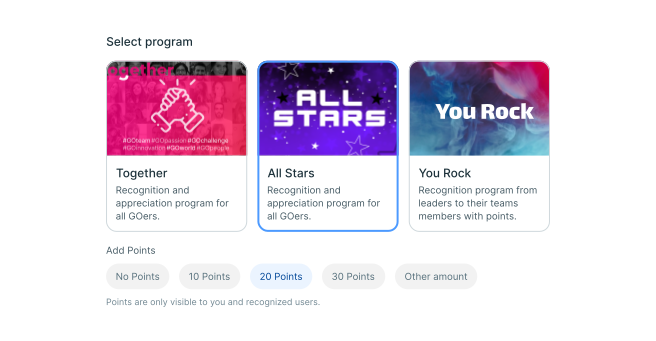
Company Recognition
Implement formal employee recognition programs, aligned with objectives, culture, and performance. Managers and leaders highlight achievements and reinforce strategic behaviors.
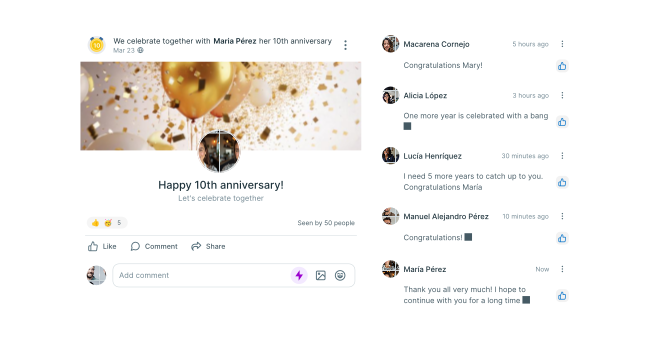
Work Anniversary
Celebrate employee tenure with automatic work anniversary programs.
A single app with a local support team in the United States to recognize and communicate employee recognitions.
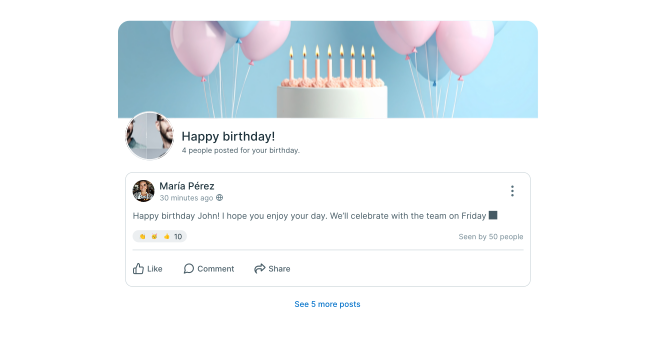
Employee Milestones
Celebrate important moments in the employee journey such as company onboarding, birthdays, promotions, and personal achievements.
How workplace recognition programs work
Step 1
Recognize professional achievements and positive behaviors
Step 2
Reward employees with points, badges, or recognition messages
Step 3
Celebrate achievements and make recognition visible across the entire organization
Marketplace for Award and Incentive Redemption for Employees



















Frequently asked questions
Why create recognition programs?
Why create recognition programs?
Constant recognition increases employee engagement, strengthens job satisfaction, and creates a culture of appreciation. All these factors reduce turnover and increase employee performance. Employees who feel seen and appreciated have a greater sense of belonging and stay longer at the company. Additionally, when recognition is connected to individual performance, the impact on talent retention is even greater.
What is the impact of recognition programs on employees?
What is the impact of recognition programs on employees?
Research shows that recognized employees have eNPS scores 25% higher than unrecognized employees, and show results up to 50% higher for the statement 'I ❤️ My Company'.
What are the best practices for corporate recognition?
What are the best practices for corporate recognition?
Best practices include recognizing frequently, transparently, and aligned with company values. Recognition should have relevance on the leadership and senior management agenda. Recognition must become part of the organization's culture. It is important to acknowledge both big and small efforts. To do this, use different formats: peer-to-peer praise, goal celebrations, performance awards, and real-time recognition. Ensure leaders actively participate and that the process is accessible and visible to everyone, or as many employees as possible. It is also very important to allow rewards personalized to each person's needs; finally, create a continuous cycle of improvement and periodic renewal.
What are the most common types of recognition programs?
What are the most common types of recognition programs?
The most common types of recognition are:
- Service anniversary recognition
- Recognition related to values and behaviors
- Symbolic and non-monetary recognition and monetary recognition
- Recognition and incentives for achieving goals and objectives
- Recognition for activities, gamification, and engagement
- Recognition for campaigns and extraordinary attitudes
- Recognition for brand commitment, strengthening Employer Branding.
What are the main objectives of recognition programs?
What are the main objectives of recognition programs?
Research shows that the main objectives are increasing engagement, creating a recognition culture, and reducing turnover. Next come the objectives of providing clarity and transparency in recognition, improving cross-departmental communication, increasing team performance, and employer branding.
What are the main behaviors and values encouraged by recognition programs?
What are the main behaviors and values encouraged by recognition programs?
In the programs we manage, the main behaviors are related to teamwork, performance and excellence, and customer focus. Beyond these values, Innovation, Respect, Leadership, and Culture follow. To a lesser degree, we see programs that encourage Health and Safety, Inclusion and Diversity, and Transparency.
How many recognitions should we have or expect in our organization?
How many recognitions should we have or expect in our organization?
The number of recognitions varies considerably depending on the industry, culture, and recognition model. But our studies show that in more developed organizations, a good goal is to reach between 6 and 12 recognitions per employee, considering both non-monetary and monetary recognitions. For organizations in early stages of developing a recognition culture, aim for a minimum of 2 to 3 recognitions per employee per year.
How to engage employees with prizes and incentives?
How to engage employees with prizes and incentives?
To genuinely engage employees, prizes and incentives must be relevant, personalized, and aligned with team preferences. Combine material rewards (gift cards, products, experiences) with public praise and social recognition. Platforms like the GOintegro App allow professional recognition to be transformed into points that employees can redeem for prizes, which greatly increases engagement.
How to create an employee recognition program?
How to create an employee recognition program?
To create an effective recognition program, start by defining the values, behaviors, and results you want to incentivize. Then establish clear evaluation criteria, choose recognition formats (public praise, awards, points, badges), and ensure the process is transparent and accessible to everyone. It is also essential to integrate professional recognition with performance, connecting real achievements to company objectives. Finally, choose a platform like GOintegro that facilitates communication and recording of celebrations.
What are some award ideas for employees in companies?
What are some award ideas for employees in companies?
Among the best ideas are: gift cards, service subscriptions, online courses, tech products, experience vouchers, days off, wellness kits, and team-customized awards. The ideal is to offer variety, allowing each employee to choose what best fits their lifestyle. Platforms with a digital catalog facilitate this personalization.